What if Freire Had Facebook? A Critical Interrogation of Social Media Woke Culture Among Privileged Voices in [Computer Science] Education Discourse








In this episode I unpack Coppola’s (2021) publication titled “What if Freire had Facebook? A critical interrogation of social media woke culture among privileged voices in music education discourse,” which summarizes Paulo Freire’s works and hypothesizes how Freire may have responded to some forms of woke culture.
-
Welcome back to another episode of the
csk8 podcast my name is Jared O'Leary
each week of this podcast is either an
interview with a guest or multiple
guests or a solo episode where I unpack
some scholarship in relation to Computer
Science Education in this week's episode
I'm unpacking a paper titled what if
Freddy had Facebook a critical
interrogation of social media Walt
culture among privileged voices in music
education discourse by William Coppola
and yes it said music education
discourse as I've done multiple times in
previous episodes I'd like to unpack
scholarship in a variety of domains in
education and consider what might this
mean for the field of Computer Science
Education here's the abstract for this
paper quote in this paper I critique the
ways in which music education
professionals especially the privileged
voices within our field engage in
dialogue through social media Outlets
such as Facebook while social media has
become a valuable and ubiquitous
discourse discursive tool within our
field especially in that it
theoretically removes the Ivory Tower of
dialogue and Academia year I critique
its dark aside where he lied today I
question how philosopher Paolo Freire
would respond to the dialogical
opportunities afforded by social media
and the emergence of woke culture
particularly when engaging in the work
of anti-racism I highlight how
privileged music educators can silence
any dialogue through their hostility or
fragility alike through various forms of
call out culture cancel culture virtue
signaling and tone policing I draw upon
the full Corpus of Freddie's Works to
examine the overall veracity of these
approaches to anti-racist efforts and
offer that Ferrari's pedagogy was
interminally rooted in humility love and
the pursuit of shared Humanity end quote
about to summarize this paper into a
single sentence I'd say that this paper
summarizes Paulo Freddie's works and
hypothesizes how Freire may have
responded to some forms of what culture
paper is available for free you can find
a direct link to it in the show notes
which is available at geraldleary.com or
by clicking the link in the app that
you're listening to this on you'll also
notice there that this podcast is
powered by Buddha professional
development which is the non-profit that
I work for if you haven't checked it out
yet go to boot atp.org and take a look
at the free curriculum that I created or
learn more more about our paid
professional development and by the way
if you haven't listened to the episodes
or read the book pedagogy of the
oppressed I have a four part series on
it one for each of the chapters in the
book so I'll link to those in the show
notes if you haven't listened to those
yet maybe start there and then come back
to this episode so the author begins a
paper by describing how many people have
critiqued the Ivory Tower nature of
Academia or even the slow nature of it
in terms of not being able to respond
like I had a publication take three
years after I wrote it until it finally
came out this is because of publication
related delays so a lot of academics or
a lot of people engaging in
conversations around social justice and
Equity are turning towards social media
Outlets like Facebook or Twitter or
wherever to engage in discourse around
anti-racism and Teresa's practices and
pedagogies Etc now a lot of Educators
who engage in this kind of dialogue are
doing so in ways that might quote Freddy
however the author argues in this
particular article that even though
you're saying you're engaging in
dialogue Allah Paulo Freddie you might
not actually be you might actually be
making some things worse so this author
kind of takes a look at that in a polite
critique on how we might actually engage
in this advocacy work in ways that might
be more beneficial and we're currently
doing all right so here's a quote from
page 17. I'm going to modify music
educators like throughout these quotes
that I'll read and change it to computer
science Educators just so it's not a
drawing like wait what so here's a quote
from page 17. quote recent trends like
call out culture cancel culture virtue
signaling and tone policing suggest a
timely need to reflect on Friday's ideal
of humanization and question at what
ends it Should Be Imagined do such acts
humanize by bringing us closer to a
shared social justice Vision or do they
dehumanize as Roberts offers by impeding
Upon Our dialogical ethos and liberatory
aims particularly when white and white
presenting computer science Educators
already overrepresented in our academic
spaces utilize the same resources as
afforded to all through social media
they have the potential to overpower
those that most need to be heard the
voices of the marginalized when these
exchanges become riddled with either
mean-spirited call outs and
self-regulatory virtue signaling
behaviors on the one hand or silencing
tactics or tone policing on the other
dominant voices run the risk of becoming
a vitriolic megaphone of whiteness
potentially drowning out the
marginalized despite their intentions
end quote and by the way in case you
don't know should share my own
positionality on this I'm a white
non-binary individual I have many sorts
of privileges whether it be my level of
Education socioeconomic status cultural
capital or wealth Etc so even though
like this is a white individual calling
out whiteness this is me sharing an
interesting perspective that I think
white people in particular would benefit
from listening to or reading if you want
to read the whole thing I enjoy the
paper I think it has some interesting
perspectives to consider and I hope that
this episode helps you so at the end of
this introduction the author says okay
well here's the two things that I'm
trying to do with this particular paper
one is to challenge privileged voices
and then two is to reframe a potential
approach for engaging in emancipatory
dialogue a la Palo veretti and again if
you haven't listened to the episode on
it I think it's chapter three in
particular that talks about kubetti's
use of dialogue and the importance of it
now the author also provides their
positionality they said that they too
have many Privileges and are a white
individual and have white fragility
despite trying to be aware of it and
trying to limit it through
self-reflection it's one of those things
that they can't fully get rid of and so
that their social blind spots May kind
of manifest themselves in their writing
and I guess I should give the disclaimer
that I too might have some social blind
spots that will manifest the self in
this podcast or any of the others that I
do or any of the other presentations
Publications Etc so if you happen to
notice something that like I might not
be aware of feel free to um reach out to
me and we can have either a private
conversation or a public one and turn it
into a podcast episode kind of unpack
some of the problematic things I might
unintentionally be saying that I'm not
aware of there's a contact me button on
my website if you're interested in that
conversation so here are four things
that the author mentions that they are
trying to do quote one listening more
than I talk in an attempt to Center the
experience of bbia black brown
indigenous and Asian people rather than
bringing attention to my own
self-edification two learning about
anti-racist work through personal
research and conversations with other
dominant voices to avoid burdening bbia
people with the task of educating their
white colleagues three working toward a
comfort with discomfort so as to remain
both non-defensively accepting of
criticisms toward my role in
perpetuating systemic racism and
receptive to opportunities for
self-growth and four finding ways to
engage in anti-racist efforts in a way
that both support and uplift ebia people
without drawing attention away from
their efforts end quote the author goes
on to say that the intended audience for
this is white Educators the author notes
that if white educators are in fact
quote truly committed to supporting and
uplifting bbia voices we must re-examine
in the actions we take and the name of
allyship our co-conspiratorship to our
behaviors Center bbia people or
ourselves do our words bring more profit
to our egos not to mention our
professional standings than their
livelihoods end quote it's from page 20.
alright so the next section the author
kind of summarizes some of Paulo
ferretti's work-like discussions around
what does banking mean in education but
because I've already done four episodes
related to petticoge of the oppressed
I'm going to skip that so you're welcome
to listen to those episodes or read the
couple of pages on this there's also
some critiques that are offered here
which I do provide some critiques at the
end of episodes in the form of like some
questions some things to consider or
just some lingering thoughts that I have
but kind of two of the main ones that
are mentioned here is like one is that
the approach may actually exacerbate
some of the power hierarchies that exist
between teachers and students and then
another one is that it kind of centers
Western epistemologies and kind of lacks
a nuanced discussion around feminism and
anti-racism which he author mentions
that Freddy adjusts later on in their
discourse and says yeah you're right I
should talk about this more and so later
Publications that came out after
pedagogy they press they do talk about
some of that stuff more if you want to
read more about the critiques check out
Pages 22 23 but starting at the end of
page 23 is kind of a conversation around
well what are some of the terms that are
going to be discussed that are related
to woke culture so first we're going to
start with what does it mean to be woke
so here's a quote from page 24 quote
being woke in effect quickly evolved
from a genuine expression of one's
awareness of racial Injustice to a
self-promotive way for mostly white
people to disingenuously articulate
their social Consciousness my opinion
liken the self-interested pursuit of
wokeness to participating in the woke
Olympics where white people's obsession
with appearing socially conscious became
more about winning a game than actually
inspiring social change binyum explained
that the rules of the game included
naming racism whenever it presents
itself and condemning other white people
who are lagging behind successfully
isolating your opponent is how you win
the match the best players are those who
accumulate the names of people who are
racist or of things that have racism in
them woke Olympians in other words are
frenetic curators of the most obvious
aggressions they launch a series of
condemnations in tweets Facebook
statuses album reviews and call it
cultural critique end quote from page
discusses is call out culture and cancel
culture for cancer culture that is when
somebody views somebody else's Behavior
actions or discourse is so problematic
that engaging any kind of conversation
with them would be pointless so the only
possible response that one can do is to
erase their existence not engage with
them not mention them Etc and obviously
I mean metaphorically erase your
existence not literally on the other
hand we have the call out behaviors
which are publicly calling out things
that you determine to be problematic and
the author mentions there's also another
approach that's similar to call out but
is called calling in are you trying
privately engage in dialogue with the
person to help them understand how what
they are saying or doing might be
problematic however the author mentions
that this might have the effect of
reinforcing white fragility another term
that the author mentions is virtual
signaling which is sometimes also
referred to as moral grandstanding or
performative allyship so the author
cites toasty and warmk says that there
are five ways that people engage in
these like grandstanding behaviors
here's a quote from page 26 quote versus
the act of one piling on which occurs
when a grandstander wishes to get in on
the action regarding something that has
already been said for instance they may
re-articulate a seemingly woke comment
in their own words in an attempt to
achieve the same woke points as someone
else they may also too ramp up by making
increasingly strong claims about the
matter in question in order to
communicate even greater outrage thus
implying Superior morality third they
may three Trump up by insisting on a
moral problem where none reasonably
exists or Express four excessive outrage
where the wokis person is the one who
expresses the greatest degree of
repugnance finally five claims of
self-evidence occur when a person
signals that their morality is above
public discourse for example responding
to an offensive statement by commenting
if you cannot understand how this is
problematic then I refuse to engage you
any further end quote so each of those
five are some examples of virtue
signaling or moral grandstanding so why
is this a problem well the author
mentions that we could increase cynicism
could also increase what the author
refers to as outrage exhaustion which
can make it difficult to figure out like
various degrees of offenses to figure
out when actual outrage is important and
appropriate and then it can exacerbate
the group polarization that has been
going on for quite some time now I say
the words midterm elections that might
ring the bell on some examples of group
polarization that goes on another
potential problem is that because of all
this like virtual signaling that's going
on is people might look at this and go
I'm going to remain silent because I
don't want to appear as though I am
engaging in Virtual signaling which is
something that I felt for quite some
time and you'll notice a shift over two
years ago in the podcasts or is like
nope I can't remain silent even if it
comes across as virtual signaling I will
try and learn from those moments where
it comes across that way so I can
continue to improve my dialogue because
while I think that purchase signaling
can be a problem I also think that we
need to be more public about
conversations around equity and CS
education or just education at large or
you know in general everywhere so the
next term that the author mentions is
something called tone policing so the
author has a quote from Mira sukaraf on
page 27 that says that tone policing
quote originated in social justice
circles to critique the phenomenon of
someone inappropriately trying to
control the way a marginalized person
re-las their experience of Oppression
they accuse tone police of focusing on
oppressed people's emotional intensity
to deflect from the actual message in
order to avoid doing something about
oppression and marginalization end quote
so as a generic example of what tone
policing might look like you might think
of instances is where a group of people
or a person is oppressed and they get
upset about it and basically say
something like hey why are you
oppressing me this is problematic
because of a b and c the oppressors tone
police when they say you shouldn't be
upset that's not how you're supposed to
communicate you need to engage in a more
civil conversation blah blah blah blah
as opposed to actually addressing the
points made with a b and c that were
examples of forms of Oppression they
focus on well you use the tone of voice
that I don't like so completely
sidesteps the actual issue and ownership
of the problem and focuses on
controlling somebody who is being
oppressed in a way that might be
described as gaslighting here's a quote
from page 28 quote the person engaging
in tone policing is said to be making an
ad hominem attack against the
interlocutor by focusing on personal
qualities I.E their emotionality rather
than the validity of their arguments on
the other hand the victim of tone
policing is said to be committing the
logical fallacy of appeal to emotion
argumentation and Passions end quote and
a little bit further down quote tone
policing requires the oppressed to play
the game according to the oppressor's
rules end quote alright so the next
section starting on page 28 is titled A
frederian interrogation of social media
what culture here's a couple of quotes
from page 28 that are interesting to
consider quote First Freddy likely would
have been an outspoken proponent of woke
culture as it originated among black
people but would have deeply
problematized its whitewashing as it
began to decenter Black voices in favor
of white-centric self-proclamations of
social awareness and quote a little bit
further down on that page quote he also
likely would have seen white people's
adoption of wokeness as a potentially
well-intentioned but disingenuous
attempt to Proclaim their solidarity
simply because naming one's oppression
can only be done by the marginalized
never for the marginalized end quote now
when it comes to call out culture cancel
culture Etc Freddy according to author
would very likely have said that this is
a necessary part of dialogue although it
can be uncomfortable it needs to be done
however the way that people call out can
come across as dehumanizing rather than
actually engaging in open dialogue so
that approach can end up just flipping
the oppression so that those who were
the oppressors now become the oppressed
so an example of that I've been to some
conference sessions where some outspoken
feminists have engaged in what I would
consider to be oppressive acts towards
men which I don't understand because in
their presentations they talk about how
problematic it is to engage in such
behaviors towards women so therefore
they're going to do it towards men I
understand that some people like to take
the approach of giving somebody a taste
of their own medicine but if a behavior
is problematic when it's being done to
you why would you do it to somebody else
so the same thing happens with cancel
and call out culture the ways that
people engage in calling out somebody
can in fact become dehumanizing abusive
or at the very least problematic so
here's a quote from page 30 that's
important to consider quote shaming and
ridiculing one's interlocutor through ad
hominem attacks for instance or
irrevocably associating them with a hate
group such as the KKK reduces them to
objects and rejects their subjectivity
for personal growth and transformation
this tuferi is the work of
dehumanization end quote I think that's
really important thing to consider the
ways that people sometimes communicate
online can treat people as immutable
objects that are incapable of
transformation or growth or Evolution
however you want to consider it and this
is problematic like when I was younger I
engaged in behaviors and said and did
things that I no longer do because I've
grown I've learned that oh even though I
might intend it as a joke it might not
be received that way or going a bit
deeper some of the things that I thought
and said were based around biases that
were unconscious to me at the time and I
Now understand we're problematic and to
go even deeper I have biases that are
problematic right now that I'm not aware
of but the only way that I can become
aware of it is by continuing to reflect
and engage in dialogue so acknowledging
that who I was five years ago is
different than who I am today which is
different than who I'm going to be five
years from now and so we need to
consider that when engaging with people
online as well somebody might say
something that is sexist or racist
transphobic homophobic Etc they might
not be aware of it so we don't need to
treat them as lesser than human by
objectifying them and saying you will
never change some people might not on
some things others will and we won't
know until we actually engage in some
kind of a dialogue but we can't do that
if we engage in cancel culture in
particular because that stops the
conversation and says this person will
never change therefore I am done
engaging with him here's a quote from
page 30. quote to this end Freddy
asserts that those who avoid such
encounters treat others as mere objects
instead of nurturing life they kill life
instead of searching for life they flee
from it and these are oppressor
characteristics the thus similar to
vitriolic callouts canceling someone
denies them as subjects and reduces them
to immutable objects end quote however
the author does note that there are
forms of cancer culture that may be
beneficial so here's an example from
page 31. quote people who have been
harmed by racial violence and Trauma
throughout their lives might
strategically utilize cancer culture not
to dehumanize their interlocutors but
rather to humanize themselves by
refusing to exhaust their emotional
labor on someone who continuously
commits violence through their ignorance
end quote that resonated with me had
variety of people in my life who it's
clear that this is not the moment for
them to seek to understand other
perspectives and so while I might choose
to not engage in dialogue with them on
those Topics in that moment we can
resume the conversation down the road at
a point when they are more able to
listen and engage in a two-way
conversation rather than a monologue
alright so the next section starting on
page 31 is titled the ethics of virtue
signaling and certain approach that
people tend to use in online discourse
is actually re-center their whiteness by
putting the spotlight on themselves and
their virtue signaling rather than
centering on the experiences of
marginalized people who are being
oppressed here's a quote from ferreri
which is quoted on page 32 quote
pedagogy which begins with the egoistic
interests of the oppressors an egoism
cloaked in the false generosity of
paternalism and makes you press the
objects of this humanitarianism itself
maintains antibodies oppression it is
the instrument of dehumanization end
quote this process of virtual signaling
can create teams or tribes of in-group
and out group this too is dehumanizing
and it puts groups against each other
rather than engaging in dialogue with
people outside of the group you instead
talk about the out group within your
group Next subsection in here tone
policing starts on page 33 so tone
policing again is the idea that you're
silencing or controlling through forms
of gaslighting the oppressed and
according to the author ferreri said
that motion is an important and crucial
role when engaging in dialogue although
with a caveat to that it's not entirely
based on emotion alone but the argument
certainly can have emotion and so the
author basically says that tone policing
quote should generally be viewed as a
dehumanizing tactic that is not in line
with ethos of frederian dialogue End
quotes from page 34. the next subsection
is on a pedagogy of love and humility so
the author says that love was actually a
precondition for dialogue and Liberation
and so again if we engage in behaviors
that are dehumanizing we end up flip the
oppression to those who were formerly
the oppressors okay so the next section
starting on page 35 is titled toward a
pedagogy of humility so this has
subsections around non-superiority
unfinishness open-mindedness and
epistemological uncertainty so let's
quickly talk about each of those so with
regards to non-superiority basically if
you want to engage in dialogue with
people you need to not assume that you
have superiority over other people so
for example some of the ways that of
people engage in discourse online
engages in a dialogue that can come
across as assuming oh I figured out this
thing and you have not therefore I know
more than you this comes across as an
heir of superiority if I were to speak
to my younger self today I would need to
make sure that I did not engage in an
air of superiority because I look at my
younger self and be like Oh yeah I
remember when I used to think that
you're going to change your mind here's
why Etc so engaging in a dialogue with
somebody else try to be very careful of
not coming across in a condescending way
or in a way that comes across as you
figured it out and are more Superior
than another person a framing that
resonates for me with this is what's
called a beginner's mind in Buddhist
discourse and it's the idea of a glass
that is half empty from a Buddhist sense
it is half empty meaning that it is open
to be filled so if you take a beginner's
mind you are open to learn new things to
be filled like a glass that is half
empty so if we engage in some kind of a
dialogue that might be something to
consider make sure you're not coming
across as superhero to somebody else
another thing to consider with the
unfinishedness which is the next
subsection is to remind yourself that
everybody is unfinished so as I was
mentioning earlier who I was five years
ago is different than who I am now and
is different than who I'm going to be
five years from now that's true for
everyone if you ever feel like you have
arrived at the correct solution to life
you will likely find that five years
from now you'll realize you did not
arrive you continue to learn new things
and change so we need to engage in
conversations with people acknowledging
that both we are unfinished and the
people we engage in dialogue with are
also unfinished here's a quote from page
matter how far along some activists may
consider themselves the vast majority
will likely have originated from within
the same intellectual starting point one
in which they were systematically
discouraged from engaging in critical
thinking and questioning the status quo
throughout their formative educational
years viewed this way one person does
not inherently possess greater
intellectual superiority or more
virtuousness than another there are only
those who have begun the work of
dismantling their neoliberal foundations
sooner than others end quote and then
the next subsection open-mindedness
again this goes back to what I was
discussing with the Buddhist concept of
beginner's mind or glass half empty is
being open to seeking to acknowledge and
understand another person's worldview
and even criticism of your own here's a
quote from page 39 quote if one adopts a
closed-minded or absolutionist regard
toward their interlocutor the best one
could hope for will be a monologue
masquerading as a dialogue where
convincing the other of one's truth
becomes the only goal end quote I don't
know about you but I've had so many
conversations with people they claim
it's a dialogue but really they're just
trying to convince you of the thing that
they believe whether it's like a
salesperson like we bought a car a few
months ago and engaged with sales people
who like did not care actually about
what we were interested in buying and
only wanted to sell the thing that they
wanted to sell and surprise we did not
buy from them it's important for us to
also consider like myself to go oh am I
actually engaging in dialogue right now
or not maybe in the last subsection on
here is epistemological uncertainty and
so this is what Patty Luther refers to
as quote Praxis of not being so sure end
quote so this means is that critical
pedagogies often used in a dogmatic way
and so we need to make sure that when we
are engaging in such a process that we
do not dogmatize it so there's a episode
that I actually did on a paper by Thomas
Rogowski called methodology so it kind
of talks a little bit about that so I'll
include a link to that in the show notes
alright so the last main section of this
paper starting on page 40 is toward a
more dialogical social media culture so
in this section the author describes how
the nature of social media circles can
kind of curate like-minded individuals
this can quote often serve to cocoon
feelings of safety among the privileged
who might hide behind the screens as
they defer personal responsibilities
social justice causes in the real world
in quotes from page 40 so while it's
nice to find groups of people that we
might resonate with we also need to be
cautious about it it's good to seek
outside perspectives here's an important
quote from page 41 quote on social media
as well as on our social lives it
becomes imperative to listen more than
we talk to seek to understand more than
we seek to judge engaging with others
through the potentially impersonal
format of social media requires
scrutinizing our interpersonal
commitment to one another in the process
end quote a little bit further down this
is a quote on page 41 and into 42. quote
through the perspective of one's ego
outspoken displays of wokeness in the
form of call outs or performative
allyship might look and feel
constructive and indeed May introduce
some degree of social awareness toward a
particular issue but the self-motivated
nature of these exchanges will often
leave the process falling short of its
potential as such in the name of
co-conspiratorship one ought to look to
the intended goals of these actions and
critically examine how effectively the
means justify the supposed ends if one
worthwhile aim of co-conspiratorship is
to further promotion and transmission of
its cause across the entire profession
then to what degree might a vitriolic
approach to dialogue effectively
realizes aim end quote and another quote
from page 43 quote surely any educator
should without hesitation endorse an
ethic of love and caring toward their
students because it is Within These very
environments that students are known to
feel empowered to thrive how then might
we prioritize such an ethic among our
students but turn our backs on it when
it comes to our peers an ethic of care
should not be viewed as merely
developmental for the Youth alone but
essential to all human interactions
after all as Educators we should
certainly rebuke Any teacher resorting
to personal condemnations immediate
spirited criticisms toward their
students would our colleagues not also
be best motivated by an ethic of support
and tough love over a spirit of
denunciation and dehumanization end
quote a little bit further down on the
same page quote making anti-racism a
widespread educational standard rather
than the selective license of the woke
alone can occur only when we affirm the
capability of every last computer
science educator to see themselves in
this essential work and prepare the
computer science education profession at
large to take on their respective roles
in the process end quote all right and
then the last section of this paper is a
tldr too long didn't read and so I'm not
going to summarize that there because I
just kind of summarized the whole paper
I do highly recommend taking a look at
this paper and again you can find that
in the show notes at jaredeliry.com but
at the end of these unpacking
scholarship episodes I'd like to share
my lingering questions and thoughts and
so one of them is if you are in a
marginalized group how do you prefer
co-conspirators collaborate with you so
as an example I'm non-binary one of the
marginalized groups that I'm a part of
and when I hear people who are trying to
be an ally for the trans Community there
is a tendency to do so in ways that
presents a false homogeneity within the
trans Community which given that there
are transgender transsexual non-binary
genderqueer gender non-conforming Etc
identities all housed within the capital
T trans umbrella becomes problematic to
say that everyone within this community
thinks the same way it even becomes
problematic if you say that all
non-binary individuals think the same
way so for me I prefer co-conspirators
to let individuals within the community
represent themselves so Elevate or
amplify voices but don't take over the
conversation and decentralize but you
might have a different perspective and
for a different marginalized group now
another question that I have is in what
ways do I unknowingly engage in these
problematic forms of what culture when
might that cause the opposite intended
effect although I'm constantly trying to
reflect and iterate and learn from
others it's hard to uncover unconscious
biases so a question that I have for you
is how do you seek to understand when
you are engaging in problematic habits
of communication if you'd like to chat
through this on the podcast or Reach Out
privately again there's a contact me
button on my website but I hope you
enjoyed this episode this was very
interesting paper to read I do highly
recommend reading through it and sitting
with it reflecting on it read through
this paper like about a month ago it was
good to revisit it after having some
time to sit through it and think through
it but thank you so much for listening
to this episode if you enjoyed it hope
you consider sharing with somebody else
or leaving a review on whatever app that
you're listening to this on stay tuned
next week for another episode until then
I hope you're all staying safe and are
having a wonderful week
Article
Coppola, W. J. (2021). What if Freire had Facebook? A critical interrogation of social media woke culture among privileged voices in music education discourse. Action, Criticism, and Theory for Music Education, 20(1), 16–52. https://doi.org/10.22176/act20.1.16
Abstract
“In this paper, I critique the ways in which music education professionals—especially the privileged voices within our field—engage in dialogue through social media outlets such as Facebook. While social media has become a valuable and ubiquitous discursive tool within our field, especially in that it theoretically removes the “ivory tower” of dialogue in academia, here I critique its darker side. Were he alive today, I question how philosopher Paulo Freire would respond to the dialogical opportunities afforded by social media and the emergence of “woke culture.” Particularly when engaging in the work of antiracism, I highlight how privileged music educators can silence any dialogue through their hostility or fragility alike through various forms of call-out culture, cancel culture, virtue signaling, and tone policing. I draw upon the full corpus of Freire’s works to examine the overall veracity of these approaches to antiracist efforts and offer that Freire’s pedagogy was interminably rooted in humility, love, and the pursuit of shared humanity.”
Author Keywords
Paulo Freire, critical pedagogy, music education, dialogue, social media, woke culture, call-out culture
My One Sentence Summary
This paper summarizes Paulo Freire’s works and hypothesizes how Freire may have responded to some forms of woke culture.
Some Of My Lingering Questions/Thoughts
If you are in a marginalized group, how do you prefer coconspirators collaborate with you?
In what ways do I unknowingly engage in these problematic forms of woke culture?
When might that cause the opposite intended effect?
How do you seek to understand when you are engaging in problematic habits of communication?
Resources/Links Relevant to This Episode
Other podcast episodes that were mentioned or are relevant to this episode
Culturally Responsive-sustaining Computer Science Education: A Framework
In this episode I unpack the Kapor Center’s (2021) publication titled “Culturally responsive-sustaining computer science education: A framework,” which describes multiple courses of action for six core components of culturally responsive-sustaining CS education.
Decolonizing Education through SEL and PBL with Matinga Ragatz
In this interview with Matinga Ragatz, we discuss Matinga’s journey into education, creating environments where kids can learn through struggle, the importance of social and emotional learning (SEL), how schools promote individualism and exceptionalism, the intersections of project-based learning and SEL, decolonizing education, the importance of shared values in education, and so much more.
Education for Liberation with Martin Urbach
In this interview with Martin Urbach, we discuss the importance of intentionality in education, exploring the social/political/historical contexts that can be explored in an educational experience, student choice and agency in the design of a space or experience, how to fight oppressive systems in education from the inside, committing to continuing to learn and grow on a daily basis, and much more.
How to Get Started with Computer Science Education
In this episode I provide a framework for how districts and educators can get started with computer science education for free.
Intersections of Cultural Capital with Kimberly Scott
In this interview with Kimberly Scott, we discuss some of the problems with discourse around grit, students as techno-social change agents, teaching with culturally responsive approaches in communities that are hostile toward culturally responsive pedagogies, unpacking discourse and Discourse, considering both present and future identities when teaching, potential disconnects between theory and practice with intersectional work, comforting the disturbed and disturbing the comforted, and so much more.
Liberatory Computing Education for African American Students
In this episode I unpack Walker, Sherif, and Breazeal’s (2022) publication titled “Liberatory computing education for African American students,” which unpacks and situates the five pillars of the liberation framework proposed by El-Amin within data activism modules.
On "Methodolatry" and [Computer Science] Teaching as Critical and Reflective Praxis
In this episode I unpack Regelski’s (2002) publication titled “On ‘methodolatry’ and music teaching as critical and reflective praxis,” which problematizes the lack of philosophy, theory, and professional praxis in music education. Although this article is published in a music education journal, I discuss potential implications for computer science educators.
Pedagogy of the Oppressed
This episode is the start of a miniseries that unpacks Paulo Freire’s (1970) book “Pedagogy of the Oppressed.” This particular episode unpacks chapter 1, which discusses how oppressors maintain control over the oppressed. Following unpacking scholarship episodes discuss what this looks like in education and how educators can adopt a “pedagogy of the oppressed” to break cycles of oppression.
This episode is episode two of a miniseries that unpacks Paulo Freire’s (1970) book “Pedagogy of the Oppressed.” This particular episode unpacks chapter 2, which discusses the “banking” approach to education that assumes students are repositories of information, and then proposes a liberatory approach to education that focuses on posing problems that students and teachers collaboratively solve. If you haven’t listened to the discussion on the first chapter, click here.
This episode is episode three of a miniseries that unpacks Paulo Freire’s (1970) book “Pedagogy of the Oppressed.” This particular episode unpacks chapter 3, which discusses the importance of dialogue when engaging in liberatory practices. This episode builds off the previous unpacking scholarship episodes on chapter one and chapter two, so make sure you listen to those episodes before jumping in here.
This episode is the final episode of a miniseries that unpacks Paulo Freire’s (1970) book “Pedagogy of the Oppressed.” This particular episode unpacks chapter 4, which synthesizes the concepts introduced in the previous chapters and discusses the difference between anti-dialogical and dialogical practices in education (and at large). This episode builds off the previous unpacking scholarship episodes on chapter one, chapter two, and chapter three so make sure you listen to those episodes before jumping in here.
Racial Justice Amidst the Dangers of Computing Creep: A Dialogue
In this episode I unpack Shah and Yadav’s (2023) publication titled “Racial justice amidst the dangers of computer creep: A dialogue,” which presents a dialogue that problematizes issues around racial justice in computing education.
In this episode I unpack Kallia and Cutts’ (2021) publication titled “Re-examining inequalities in computer science participation from a Bourdieusian sociological perspective,” which uses Bourdieu’s discussions of capital, habitus, and field to analyze 147 publications on CS interventions.
The Shire as Metaphor for Systemic Racism with Joyce McCall
In this interview with Joyce McCall, we unpack and problematize some of the issues around race and racism in relation to education. In particular, we discuss the importance of allies not only showing up to support marginalized or oppressed groups, but staying when conversations get uncomfortable; the Shire from the Lord of the Rings as a metaphor for hegemony and systemic racism; as well as a variety of theories such as critical race theory, double consciousness, cultural capital; and much more.
Learn more about critical pedagogy by checking out resources by the Freire Institute
Find other CS educators and resources by using the #CSK8 hashtag on Twitter
Free CS Resources I Have Created
More Content


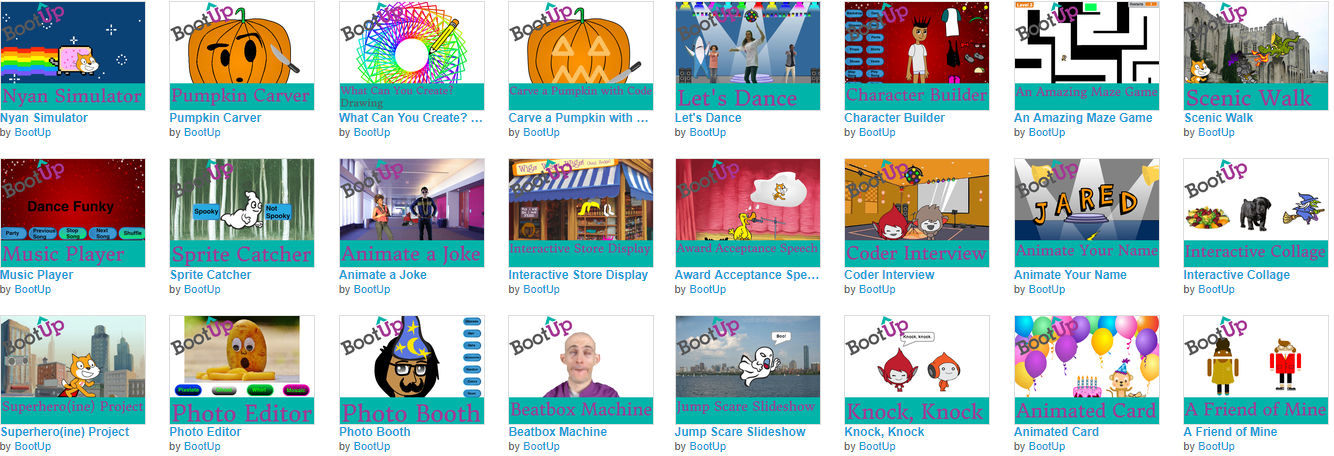
In this episode I provide a framework for how districts and educators can get started with computer science education for free.